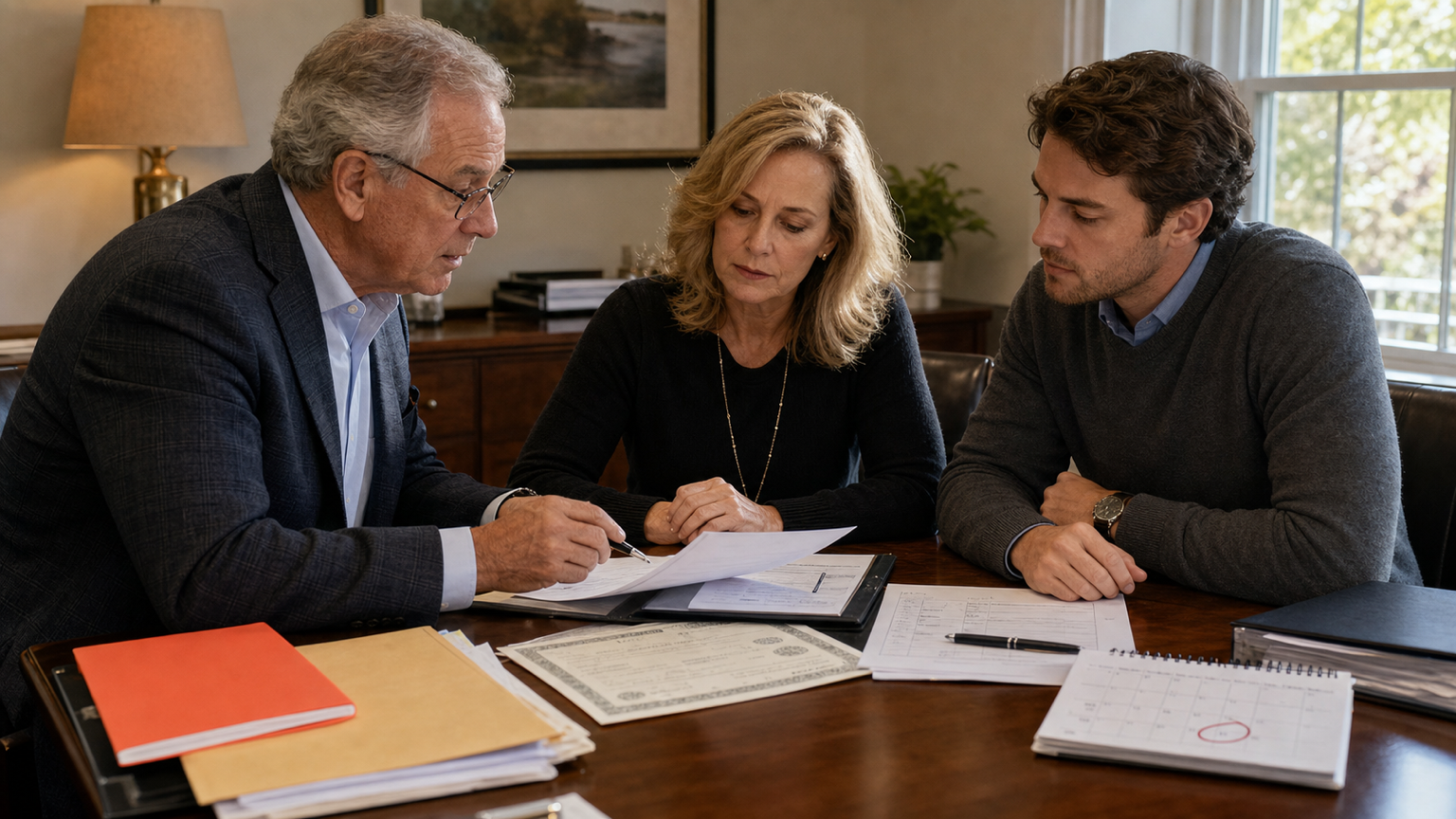

Advisors should handle estate settlement follow-up as a documented survivor-service workflow, not a sympathy note plus scattered reminders. Confirm legal authority, beneficiary and TOD instructions, tax coordination, liquidity needs, account-transfer status, and family communication before the household loses momentum.
Estate settlement follow-up begins after a client death, but the service risk often shows up weeks later. The surviving spouse needs cash-flow clarity, the executor needs documents, beneficiaries need transfer steps, and the advisor's team needs a clean way to track what is waiting on legal authority, tax review, or custodian processing.
The advisor does not need to become the estate attorney or CPA. The advisor does need a calm operating system that helps the family know what is next, which professional owns each question, and which account tasks are still unfinished.
The IRS says a final income tax return may need to be filed for the deceased person.
IRS Publication 559 explains estate income tax return responsibilities for personal representatives.
FINRA says a new account is typically opened for the beneficiary or estate after documents are received.
Start by confirming who can act
The first estate-settlement follow-up question is not investment strategy. It is authority. Who is the executor, trustee, surviving spouse, personal representative, or beneficiary with the right to request information and make decisions? Until that is clear, the firm can create confusion by treating a helpful family member as the decision-maker.
FINRA explains that after a brokerage account holder dies, the firm generally needs necessary documents before a new beneficiary or estate account is established, and account activity can be restricted until legal authority is in place. That is the practical reason advisors need an authority checkpoint before they start solving everything else.
Build a survivor-service map
A survivor-service map gives the advisor, family, attorney, CPA, and custodian one shared view of the work. It should list the deceased client's accounts, beneficiary or transfer-on-death status, jointly owned accounts, trust-owned assets, retirement accounts, life insurance, tax documents, debts, income needs, required signatures, and expected next dates.
This map also prevents the advisor from missing the human side of the work. The surviving spouse may need a short cash-flow meeting before the full estate picture is complete. Adult children may need a plain-language explanation of what the advisor can and cannot discuss. The executor may need a document list before calling the custodian.
The CFPB's Managing Someone Else's Money guides exist because millions of people manage money for someone else and need practical role-based guidance. Advisors can use that same principle: make the role, responsibility, and next task explicit instead of assuming the family understands the process.
Separate beneficiary transfers from probate assets
One common source of family confusion is the difference between assets that transfer by beneficiary or TOD instruction and assets that pass through the estate. The advisor should not give legal conclusions, but the workflow should flag which accounts appear to have named beneficiaries, which appear jointly owned, which may be trust-linked, and which need attorney review.
FINRA's transfer-on-death investor guidance notes that TOD arrangements can pass brokerage assets to named beneficiaries after death and that beneficiaries generally cannot be changed after the account owner dies. For an advisor team, the operational lesson is simple: beneficiary records should be verified before and after death, then tracked carefully during transfer.
A practical example: a long-time client dies with a joint taxable account, an IRA naming two adult children, and a trust document that the advisor has never reviewed. The team should not treat all three as one estate task. Each asset has a different document path, communication rule, tax issue, and follow-up owner.
Coordinate tax tasks without pretending to be the CPA
Taxes are where many survivor workflows slow down because the family does not know which return belongs to whom. The IRS deceased-person page says final income tax returns may need to be filed for current and prior years, balances may need to be paid, and refunds may need to be claimed. That is separate from the estate's own income tax issues.
IRS Publication 559 is written for survivors, executors, and administrators and explains federal income tax responsibilities for the decedent and estate. Advisors do not need to explain the tax code. They do need to make sure the CPA gets the right records, the family knows which questions are tax questions, and CRM reminders prevent tax tasks from disappearing.
The advisor workflow should include a CPA handoff note, recent tax-return request, date-of-death valuation request where relevant, income-distribution question list, RMD or retirement-account flags, and a reminder to revisit the surviving spouse's cash-flow and tax picture after initial transfers settle.
Create a family communication cadence
Estate settlement is emotional and administrative at the same time. Families need fewer vague updates and more calm clarity: what has been received, what is missing, what is waiting on legal or tax review, what the custodian is processing, and what the next family decision will be.
A weekly or biweekly survivor update can be enough. It should not include private information for anyone who lacks authority. It should include a short task list, expected dates, and who owns each next step. That structure protects the advisor from memory-based promises and gives the family a sense that the process is moving.
- Confirm the authorized contact before discussing account details.
- List each account by ownership, beneficiary status, and document status.
- Route legal questions to the attorney and tax questions to the CPA.
- Track custodian transfer steps until new accounts are established.
- Create survivor cash-flow, RMD, and tax follow-up reminders.
Turn the workflow into a client-retention moment
Estate settlement is not a marketing tactic. It is one of the moments when the advisor's service either becomes visible or disappears into administrative noise. Surviving spouses and adult children remember whether the advisor brought order, respected boundaries, and followed through without forcing the family to repeat the same story.
This is also where next-generation relationships are won or lost. Adult children may not keep the advisor after the estate settles, but they are more likely to listen when the advisor is organized, careful, and useful during the hardest part of the relationship.
Where a Bloomie helps without replacing judgment
A Bloomie can maintain the survivor checklist, request missing documents, prepare CRM reminders, monitor custodian status, draft update notes for advisor review, track beneficiary-transfer exceptions, and assemble a weekly survivor-service report. The advisor keeps the personal calls, professional coordination, family judgment, and recommendation responsibility.
Bloomie Staffing functions more like an AI staffing agency than another disconnected software subscription. In this workflow, a reliable Bloomie handles repeatable estate-settlement operations so the advisor can stay focused on trust, judgment, and human communication.
Questions Advisors Ask
What should advisors do first after a client dies?
Advisors should first move the household into a documented survivor workflow: confirm who has legal authority, pause account activity that requires new authority, collect death certificates and estate documents, identify beneficiary and TOD accounts, and create a follow-up calendar for tax, transfer, and family communication tasks.
Should advisors give tax or legal instructions during estate settlement?
No. Advisors should coordinate with the estate attorney, CPA, executor, trustee, or surviving spouse and keep their own advice inside the financial-planning and account-servicing lane. The advisor can track required documents, deadlines, asset movement, liquidity needs, and follow-up without replacing legal or tax counsel.
Can a Bloomie help with estate settlement follow-up?
Yes. A Bloomie can maintain survivor checklists, request missing documents, prepare CRM reminders, track beneficiary and TOD account status, draft family follow-up notes, and assemble weekly exception reports. The advisor keeps judgment, family communication, and professional coordination.
Ready to make survivor follow-up feel staffed?
Bloomie Staffing helps financial advisors hire reliable AI employees for survivor checklists, beneficiary-transfer tracking, document requests, CRM reminders, family update drafts, and recurring client-service workflows.