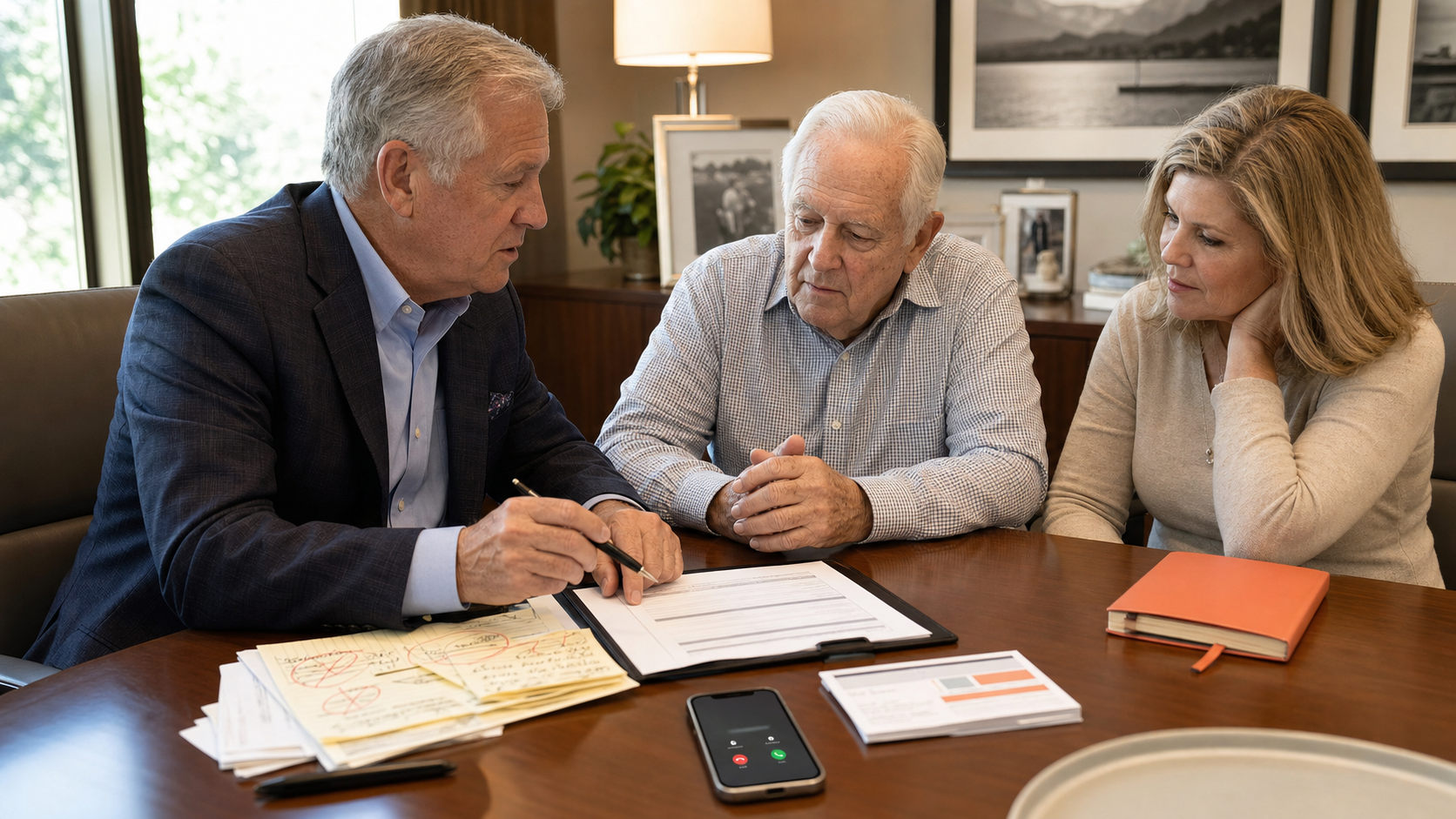

Advisors should handle trusted contacts as a recurring client-protection workflow, not a one-time onboarding field. Ask for the contact, explain the limited purpose, refresh it at reviews and life events, document consent, and create CRM reminders before aging-client or unreachable-client problems become urgent.
Trusted-contact follow-up matters because the first warning sign is often ordinary: returned mail, an unanswered phone, a caregiver who suddenly appears, a spouse who usually handled paperwork, or an older client who sounds confused about an account request.
The advisor's job is not to turn a trusted contact into a decision-maker. The job is to have a documented person the firm can contact in limited circumstances, then keep that information current enough to be useful when client protection becomes time-sensitive.
FINRA Rule 4512 requires firms to make reasonable efforts to obtain a trusted contact name and contact information.
The rule applies when opening or updating a non-institutional customer account for someone age 18 or older.
A trusted contact is for contact and safety questions, not automatic trading or withdrawal authority.
Start by explaining what the contact can and cannot do
Clients hesitate when a trusted-contact request sounds like giving someone access to their money. Advisors should explain the difference in plain language: this person may be contacted if the firm cannot reach the client, suspects exploitation, needs to confirm contact information, or has a serious concern about the client's well-being. That does not make the person an owner, power of attorney, trustee, or account signer.
FINRA's investor guidance makes that limited purpose clear and says a trusted contact cannot make trades or decisions for the account unless they already have separate legal authority. That distinction is useful because it lowers resistance and keeps the conversation focused on protection rather than control.
Ask at onboarding, then refresh after life events
The trusted-contact field should not be treated like a permanent answer. People move, family relationships change, caregivers rotate, adult children become more involved, and the person who made sense five years ago may no longer be the right call. A stale trusted contact can create false comfort for the firm and the client.
FINRA Rule 4512 says firms must make reasonable efforts to obtain trusted-contact information for non-institutional customer accounts when an account is opened or account information is updated. Advisors can turn that compliance requirement into a service rhythm: ask at onboarding, confirm during annual reviews, and refresh after major life events.
Example: a widowed client named a spouse as the trusted contact years ago. After the spouse dies, the advisor updates beneficiaries, cash-flow assumptions, estate documents, and household contacts, but the trusted-contact field remains blank or outdated. The next time the client misses calls during a fraud scare, the firm has no clean contact path.
Build a review trigger list
The best workflow is triggered by client events, not advisor memory. Review trusted contacts after death of a spouse, divorce, remarriage, a move to assisted living, a new caregiver, a family conflict, a changed phone number, a diagnosis the client chooses to discuss, returned mail, unusual withdrawal requests, or repeated trouble reaching the client.
The point is not to overreact to every client change. The point is to make the contact review ordinary enough that it does not feel accusatory. "We refresh this whenever household contacts change" is easier to hear than "we are worried about your judgment."
Connect it to aging-client protection
Trusted contacts are especially useful when aging-client service gets complicated. Advisors may notice confusion, isolation, pressure from another person, or trouble completing routine account tasks. The firm still needs policies, escalation paths, and privacy discipline, but an updated trusted contact gives the team one practical way to verify information or ask for help reaching the client.
The Consumer Financial Protection Bureau's managing-someone-else's-money resources emphasize the seriousness of helping another person manage financial affairs. Advisors do not need to turn every trusted-contact conversation into legal education, but they should know when the conversation is moving beyond contact information and into power of attorney, guardianship, trustee, or caregiver territory.
- Document who the client named and the relationship.
- Confirm phone, email, and mailing address during reviews.
- Record the client's consent and any limits the firm explained.
- Flag outdated spouse, caregiver, and adult-child information.
- Create a CRM reminder after major life events or repeated contact issues.
Separate trusted contact from legal authority
Advisors should be precise with language. A trusted contact is not the same as durable power of attorney, executor, trustee, beneficiary, or health care agent. Those roles may overlap in a household, but they should not be blurred in the firm's notes or client explanation.
This matters when a family member wants information or an adult child asks to be added. The trusted-contact workflow should point the advisor back to the client's documented consent and the firm's policies. If the client wants someone to transact, receive statements, or make decisions, that is a different process with different documents.
Make the CRM carry the work
Small advisory firms often collect trusted-contact information once and then lose the maintenance rhythm. The fix is a simple CRM view: missing trusted contact, outdated contact, spouse deceased, address changed, caregiver noted, annual review due, and repeated unreachable attempts. That view turns a compliance field into a client-protection queue.
For each household, the CRM should hold the trusted contact's name, relationship, phone, email, last confirmed date, and next review date. It should also show the reason for any refusal. A client can decline to name someone, but the firm should know that the question was asked and why the record is empty.
Where a Bloomie helps without replacing advisor judgment
A Bloomie can keep the trusted-contact workflow moving. It can produce missing-contact reports, draft client-friendly explanations, prepare review-meeting prompts, scan CRM notes for life-event triggers, create follow-up tasks, and give the advisor a weekly exception list of households that need attention.
Bloomie Staffing works more like an AI staffing agency than another disconnected software subscription. In this workflow, a reliable Bloomie handles recurring tracking, reminders, and draft communication while the advisor keeps the client conversation, privacy judgment, and escalation decision.
Questions Advisors Ask
What is a trusted contact on an investment account?
A trusted contact is a person a firm may contact in limited circumstances if it has trouble reaching a client, suspects financial exploitation, or needs to confirm important contact information. The trusted contact is not automatically authorized to trade, withdraw assets, or make financial decisions.
How often should advisors review trusted contacts?
Advisors should review trusted contacts at onboarding, during annual reviews, after deaths, divorces, moves, health changes, caregiver changes, and whenever adult children or other family members become more involved. The review should confirm name, relationship, phone, email, and whether the client still trusts that person.
Can a Bloomie help advisors manage trusted-contact follow-up?
Yes. A Bloomie can maintain missing-contact reports, prepare review prompts, draft client education, create CRM reminders, and flag households where age, health, returned mail, or unreachable-phone patterns deserve advisor attention. The advisor still owns judgment and client conversations.
Ready to make client-protection follow-up feel staffed?
Bloomie Staffing helps financial advisors hire reliable AI employees for trusted-contact reviews, CRM reminders, aging-client workflow prompts, client education drafts, and recurring service follow-up.